Thoughts
If those who do not work must starve, then capitalists must starve!" is a historic, militant labor slogan originating from early 1930s Korean textile workers protesting in Pyongyang. The establishment says that those who do not work, aka strikers, must starve. This is turned on its head, by calling out the capitalists as the ones who do not work, but rather exploit the work of others. In syllogistic form: all those who do not work must starve; capitalists do not work; therefore capitalists must starve.
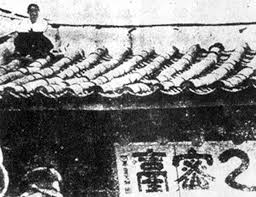
On 29 May 1931 a striking rubber worker, Kang Churyong, in Japan-occupied Pyongyang, (now North) Korea, began a high-profile solo protest on the Ulmil Pavilion landmark. The pavilion, on a scenic park, was a popular spot for morning walks, so hundreds of people soon gathered to listen to Kang who delivered a powerful speech about the fate of rubber workers who were on strike in the city against pay cuts.
Reading first hand accounts of people’s living conditions, their oppression, their hardships, and their fight back against their oppressors is as important as reading theoretical books. In fact, for less theoretical types it might be the best place to start. Individuals like Kang Juryong are inspiring. More than ever, people need to understand that social change, social improvement, human rights, etc., these things aren't just given, they have to be fought for. And they need to be fought for by the very people who need them. History shows this.
Another real female feminist socialist activist mentioned in this book is Alexandra Kollontai, a Russian revolutionary, politician, diplomat and Marxist theoretician. Served as People's Commissar for Welfare in Vladimir Lenin's government. Might be another one to follow up on. I recently read "Memoirs of a Rank and File Bolshevik", the memoirs of Cecilia Bobrovskaya. This is a great book and she is an incredible person who pretty much dedicated her entire life to the causes she believed in, frequently imprisoned, poor, often malnourished, and moving around to where she was needed, or away from where she might be caught.